No meter yet?
A simple hygrometer can help distinguish damp air from a towel-drying problem.
Compare humidity meters →Start with what stays wet. Choose your problem below for one free first step.

Try first: spread each towel over its own rail. Keep wet towels apart and open out the bath mat.
Check: drier by the next use? Keep the new hanging arrangement before buying towels.
Still damp? Compare towel weaves & buying options →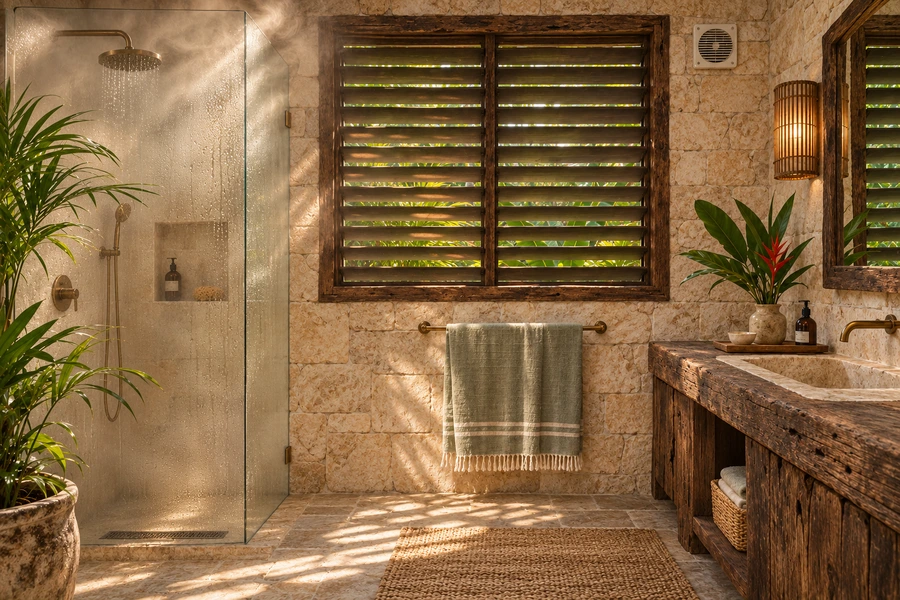
Try first: run the exhaust fan during showering and for at least 30 minutes afterwards (Health Canada). It should vent outdoors.
Check: steam still lingers? Have the fan, duct and air supply checked before buying decor.
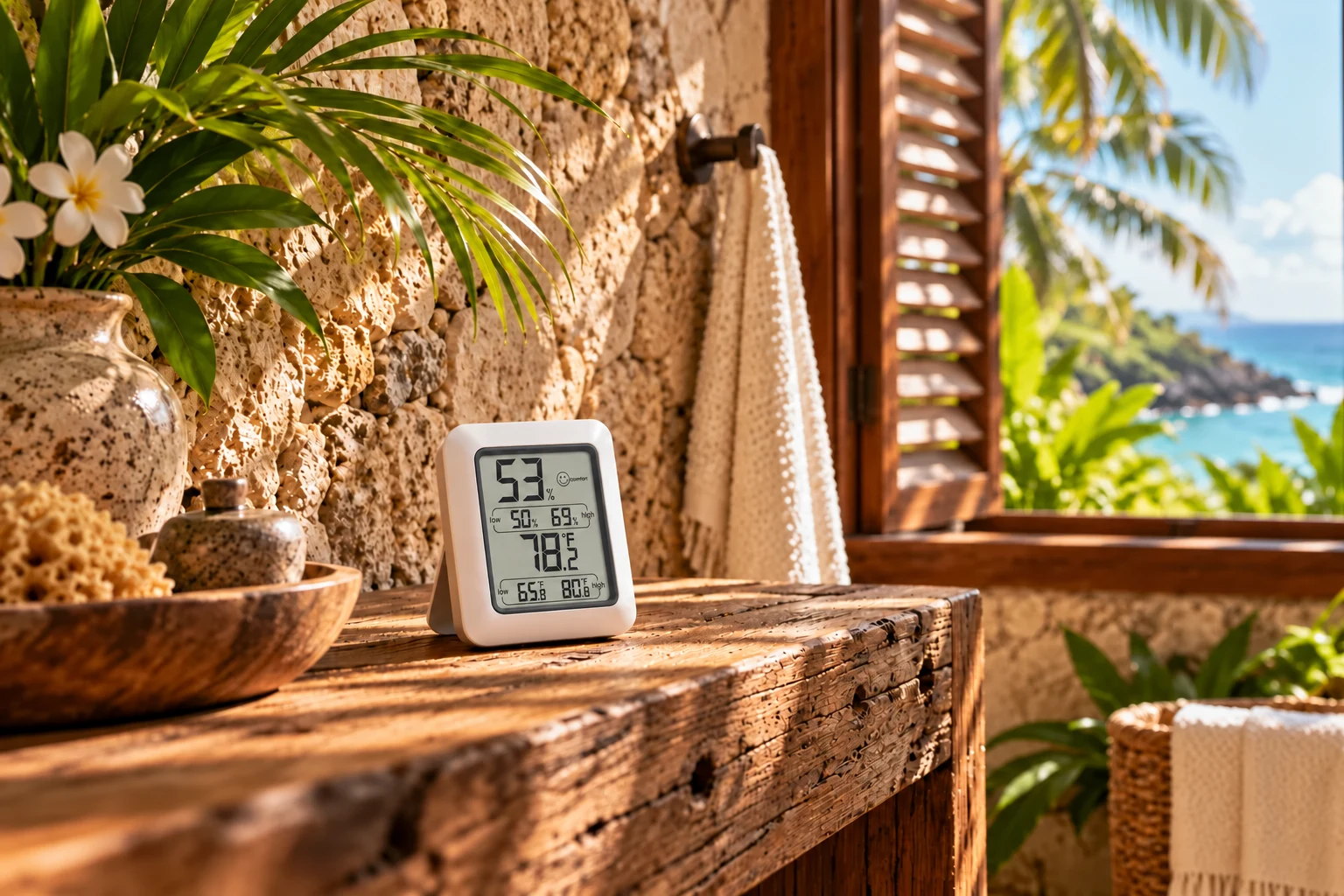
Try first: use a humidity meter before showering and after steam clears. Compare a nearby room; avoid splashes.
Check: still above 60% between showers? Investigate room humidity. The EPA advises below 60%, ideally 30–50% where possible.
Outdoor air can bring moisture in as well as take it away. A cooler breeze is not proof that it is drier. Use extraction that vents outdoors; monitor what happens rather than assuming an open window always helps. When dehumidifying, follow the appliance instructions about closing doors and windows.
Check for hidden damp and unresolved water sources rather than covering the smell with fragrance. Follow the EPA’s cleanup guidance; extensive, recurring or hidden damage may need professional assessment. A normal air-humidity reading does not rule out a local leak.